UK Marine Life - Our precious cool seas
Sea life around the coast of the British Isles is just as colourful, fascinating and beautiful as that found anywhere else in the world. Our underwater landscapes are teeming with life and amazingly varied, from rocky reefs and muddy bottoms, to deep-water channels and sea-grass meadows.
They support everything from valuable fish stocks to delicate jewel-like anemones and giant basking sharks, leatherback turtles and seals. The wealth of our seas lies in their diversity.This page will allow you access to information about some of the Marine life found around the UK coast.
This is a work in progress section and will be continually added to.
Basking Sharks
The basking shark is the largest fish in the Northeast Atlantic, growing in excess of 11 metres in length and weighing up to 7 tonnes12. It can be regularly found around the coasts of the UK and Ireland, filter-feeding on seasonally abundant plankton.
Cetaceans

Whales, dolphins and porpoises belong to a single group of marine mammals called the cetaceans (order Cetacea). The word cetacean comes from the Latin ‘cetus’ meaning large sea creature, and the ancient Greek ‘ketos’ meaning sea monster. Cetaceans are marine mammals that evolved from their land mammal ancestors around 55 - 60 million years ago and have adapted perfectly to an aquatic life during this time. There are currently about 83 species of whale, dolphin and porpoise in the world, but new species are still being discovered. See the Whale and Dolphin trust site for more information on common UK Cetaceans
Would you like to be involved in recording cetacean numbers around the UK. Then contact ORCA, an organisation committed to the study of cetaceans (whales, dolphins and porpoises) and promoting their conservation through enthusing, inspiring and educating others. You could become an ORCA observer and take part in one of their surveys on board ferrys around the UK.
Did you know how many dophinariums there are in the E. U? More than you imagine, find out more Dolphinariums in the E. U
FISH
The seas around the UK contain a fabulous array of fish life, adapted to life in shallow tidepools or to the deep sea. Humans have long depended on a bountiful supply of edible fish for food - it is only in recent times that stocks of many fish species have been drastically reduced.
Jellyfish
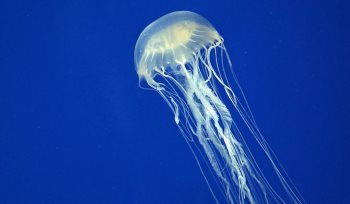
Jellyfish (also known as jellies or sea jellies or medusozoa) are free-swimming members of the phylum Cnidaria. Jellyfish are found in every ocean, from the surface to the deep sea. Some hydrozoan jellyfish, or hydromedusae, are also found in fresh water; freshwater species are less than an inch (25 mm) in diameter, are colorless and do not sting. Many of the best-known jellyfish, such as Aurelia, are scyphomedusae. These are the large, often colorful, jellyfish that are common in coastal zones worldwide.
In its broadest sense, the term jellyfish also generally refers to members of the phylum Ctenophora. Although not closely related to cnidarian jellyfish, ctenophores are also free-swimming planktonic carnivores, are generally transparent or translucent, and exist in shallow to deep portions of all the world's oceans.
Seals
Seals belong to a group of animals called pinnipeds. This means ‘winged-feet’ and refers to their flippers, which are specially adapted for life in the sea. Like other marine mammals such as whales and dolphins, they can dive to great depths for long periods of time in search of prey, their bodies are streamlined to move efficiently in water, and they have blubber to protect them against the cold. But unlike whales and dolphins, seals spend some time out of the sea.
Seahorses
“Seahorses are worth conserving. Quite apart from their intrinsic worth, these fishes are unusual and valuable in behavioural, anatomical, ecological, economic and medicinal terms: they exhibit the most highly specialised paternal care of any animal and show rare sexual fidelity to only one partner; they are voracious predators with neither teeth or stomach and have unusual grape-like gills; they contribute significantly to nutrient dynamics in seagrass communities; they provide income for many subsistence fishing families and sell for high prices; and they are used by Asian communities to treat a range of ailments, some of them potentially life-threatening” Dr Amanda CJ Vincent.
Seaweeds
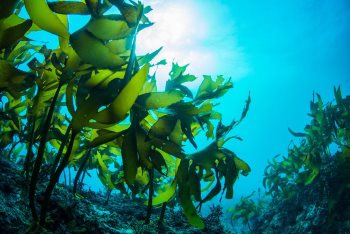
Although you may not know it, you almost certainly use seaweeds in your everyday life.Extracts from seaweeds are used in many products, including in shampoo, toothpaste, cosmetics and medicines, and in foods. Seaweeds are at the base of the marine food chain. Like plants on land, they photosynthesise, turning the sun's energy into food and removing carbon dioxide from the air. Many different kinds of animals rely on seaweeds for food and the shelter that they provide.
So, what are seaweeds?
Seaweeds are simple plant-like organisms. They live on seashores and in the shallow waters of seas throughout the world. 'Seaweed' is the collective name for a number of different groups of large algae that live in marine environments.
Even though 2 species may both be called seaweeds, this does not mean they are closely related to one another, as there are many hundreds of species in the UK alone.
Sharks and Rays
Sharks and rays are fish, but they can be distinguished from bony fish (teleosts) by their cartilaginous skeletons. There are three main types of cartilaginous fish; the sharks and rays, collectively called elasmobranchs, and the rarely encountered chimaeras (Holocephalii), a more distantly related group found only in deep water.
Sharks are a type of fish with a full cartilaginous skeleton and a highly streamlined body. The earliest known sharks date from more than 420 million years ago, before the time of the dinosaurs. Since that time, sharks have diversified into 440 species, ranging in size from the small dwarf lanternshark, Etmopterus perryi, a deep sea species of only 17 centimetres (6.7 in) in length, to the whale shark, Rhincodon typus, the largest fish, which reaches approximately 12 metres (39 ft 4 in) and which feeds only on plankton, squid, and small fish by filter feeding.
Thirty percent of EU and fifty percent of UK shark species are listed as threatened and some species are reported to have declined by ninety nine percent. Populations continue to decline under the intense pressure of unmanaged modern fisheries practices, driven by global consumer demand for shark based products.
Our Blog
Saving wild ocean places, for us and future generations
Marine Conservation History
Marine conservation is a relatively new concept, having come to be in the 70s. It began in an era known as the...Read More
 Lane G. Deleon
Human Impacts on Marine Environments
Human beings have for long relied on the sea for many reasons including as a source of food, for recreati...Read More
Lane G. Deleon
Corals and Coral Reefs
Of all marine ecosystems across the globe, coral reefs are the most diverse, earning them the name the rain...Read More
Lane G. Deleon