CORALS AND CORAL REEFS
Of all marine ecosystems across the globe, coral reefs are the most diverse, earning them the name the rainforests of the sea. Interestingly, almost a quarter of the species in the sea depend on this ecosystem for habitats and food, which makes them an essential part of aquatic life. Even more impressive is that they cover less than one per cent of the earth’s surface and less than two of the oceanic surface, yet they are responsible for keeping numerous species alive.
And it is not only marine species that depend on this ecosystem, but people do too, for various reasons. Some people rely on it for food, others for tourism-related activities, some for medicine and others for the protection of shorelines. This economy stands at hundreds of billion US dollars and is therefore vital to many people.
You would think that with so many jobs reliant on the reefs that people would take up measures to protect them, but this is not the case. Human activities, such as pollution and destructive fishing, amongst others, continue to threaten the existence of this ecosystem. As a result, you will come across some areas where the reefs no longer exist, and others where their health is in question, indicating that there is a need for the timely protection of this ecosystem.
Current Status
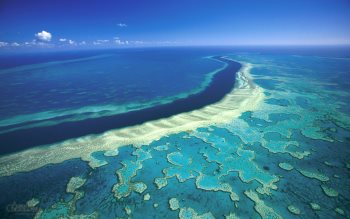
Reefs range in sizes, depending on the number of colonies, and some are so big that you can see them from space. An example of a large colony would be the Great Barrier Reef in Australia, which measures at least 2,600 km on the east coast. They come about when corals grow in water along the continental shores, islands or in shallow water.
They take a considerable amount of time to form since corals develop at a slow rate. You will find that some of the fastest growing corals do so at a pace of six inches each year. However, for most of the corals, the rate stands at less than an inch each year. You can thus see that it would take a lot of years to get a coral reef in the range of a kilometre going up. Most deep-sea colonies are thousands of years old, with the Great Barrier Reef being twenty thousand years old.
Now, the reefs also take time to grow because corals die as they develop, compacting over time. Reefs come into existence when the growth of corals exceeds their death. With this picture, you can tell that it would take a long time for a coral reef to form and it is thus essential that we conserve those that exist as we create avenues to allow more to come into being to replace those that are no longer existing. Let us take a look at some of the threats facing this ecosystem and how we can reverse some of them:
Challenges in conservation
Acidification
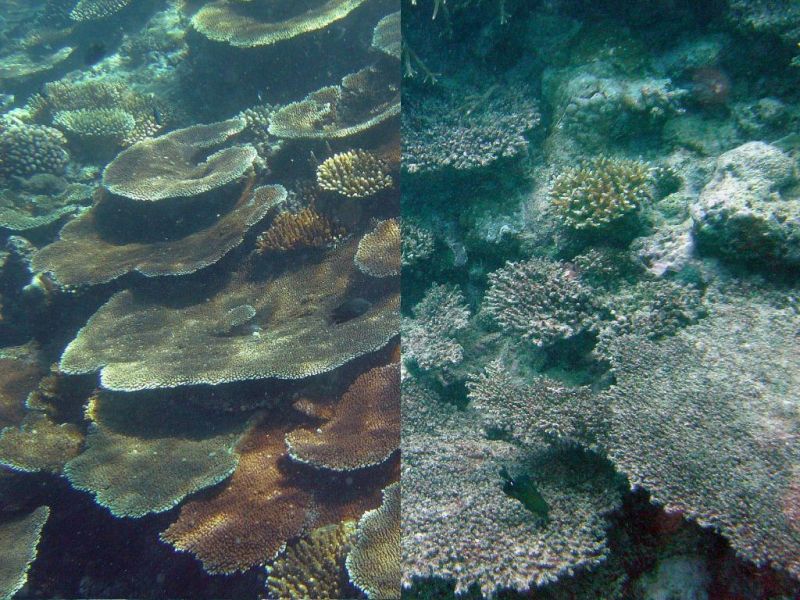
The growth of industries, as well as other human activities, has led to an increase in carbon dioxide levels as well as the production of other gases which have changed the composition of gases in the atmosphere. As a result, there has been an increase in water temperatures as well as an increase in the acidity levels in the water. These two factors have led to a loss of the algae that helps corals to make the food that they need, thus leaving them vulnerable to threats as well as leading to the death of the corals.
An increase in acidity levels makes it challenging for the corals to build their skeletons, which are dependent on calcium carbonate. Studies show that if we do not deal with the acidity levels, we could be looking at a future where the existent structures could come apart through dissolution. And this future is not far off, with scientists predicting that this could be the case in 2085. There are cases of the same happening today, with Hawaii being one of the affected regions.
Destructive Human Activities
Divers and fishers need to exercise caution when delving into areas where there are reefs as they can easily scar the structures using their anchors and fishing gear. There has also been worry that runoff from factories and sewage could feed the algae on which the corals are reliant, thereby overwhelming them. And that’s not all. With increased deforestation, soil erosion rates have increased, and this has led to more smothering of the corals owing to sedimentation of dirt on the ocean floor.
Invasive Species
Invasive aquatic species not only grow at fast rates, but they also threaten the animals that are native to the reefs, thereby altering the ecosystem and posing a threat to the reefs. Read more about them over here.
Protection
We have to ensure that the water in the ocean remains clean and that the fish species are well-protected. It is also necessary that we look into the carbon dioxide levels which continue to threaten the reefs, and which could be destructive if left unchecked. What else do you think can salvage the situation?
Our Blog
Saving wild ocean places, for us and future generations
Marine Conservation History
Marine conservation is a relatively new concept, having come to be in the 70s. It began in an era known as the...Read More
 Lane G. Deleon
Human Impacts on Marine Environments
Human beings have for long relied on the sea for many reasons including as a source of food, for recreati...Read More
Lane G. Deleon
Corals and Coral Reefs
Of all marine ecosystems across the globe, coral reefs are the most diverse, earning them the name the rain...Read More
Lane G. Deleon