|
|
|
PROJECT SEAHORSE
www.seahorse.fisheries.ubc.ca
project Seahorse began in the Philippines where seahorses are at risk from overfishing by villagers who rely on them for their livelihood. It is an integrated programme of conservation and management initiatives, working to ensure long-term persistence of wild seahorses, their relatives and their habitats, while respecting human needs and aspirations.
This collective of biologists and social workers was created in 1996 in response to increasing evidence of the large, global and destructive fishery for seahorses. Project Seahorse is led by Dr Amanda Vincent (McGill University, Montreal, Canada) and Dr Heather Hall (Zoological Society of London, United Kingdom) with teams in Canada, UK, the Philippines, Vietnam and Hong Kong.
There are currently two major seahorse conservation initiatives in operation - a community-based management programme in the central Philippines, and a Vietnamese project that is integrating biological study with pilot work in seahorse culturing. Both of these projects include development of small-scale cage culture techniques, with the involvement of local fishermen.
The Philippine project focuses on the involvement of local people. Its goal is to maintain a sustainable seahorse fishery, and it has attracted a high level of participation of local fishers and villagers. Fish sanctuaries have been established, which are patrolled effectively. Innovative procedures include holding, in sea-cages, the pregnant males that have been caught, until the young can swim free (the adult males are then sold); and co-operation between Philippine biologists and villagers in recording individual seahorse and population parameters. Fishery practices have been modified and the corralling of seahorses in the sea has been attempted.
The Vietnamese project is situated at the Institute of Oceanography in Nha Trang, and concentrates on developing techniques for seahorse aquaculture, studying seahorse biology and monitoring their trade. It is hoped that this technology can then be introduced to seahorse fishers, both in Vietnam and abroad. Virtually all of the work on the biology, conservation and trade of seahorses has been carried out by Dr. Amanda Vincent and her associated colleagues in the Philippines and Vietnam.
SEAHORSE FARMING
Because of high demand for seahorses and the decline of wild populations, new opportunities for aquaculture are beginning to be exploited. At present there are only a few farms in Europe, a commercial farm in Tasmania, another on the Gold Coast, Queensland, and one in New Zealand.
In New Zealand, research into seahorse farming began in response to known heavy fishing effort which was dramatically affecting wild populations of certain species.
MARINE AQUARIA
Seahorses are not easy to keep in aquaria, and even the large professional aquaria have limited success in the breeding and husbandry of seahorses. However, seahorses may be seen in captivity at various public aquaria in the UK, which carry out captive breeding and research programmes.
These may be vital to the survival of seahorse populations, and they serve to educate people in the conservation work on these animals and their habitats. The programmes also aim to reduce numbers of seahorses taken from the wild, and, in some cases, replenish and re-establish wild populations.
Studland Bay seahorses at risk!
There are anumber of companies who wish to continue negative activities on on the site, damaging the seagrass and threatening the future of the Seahorses in the area.
You can help us to show public opinion by voting on the Marine Conservation Societies Yours Sea Your Voice page
Click here for website
It is crucial you have your vote for this amazing unique site that is under a great of pressure and threats from destructive practises, so please vote and get your family and friends to vote to show public opinion against these activities.

Help Seahorse with the Seahorse Trust
The Seahorse Trust is a charitable organisation for:
-
Research into Seahorses and the environment worldwide
-
Education about Seahorses, marine conservation and the environment worldwide
-
The enjoyment of Seahorses and the natural world
The Seahorse Trust is run solely on charitable donations and the contributions from the general public are greatly appreciated. Without the funding and help of you all we would not be able to study these incredible creatures and provide detailed information on their species and habitats.
|
| |
|
|
|
|
|
|
|
|
Seahorses
You are here: Home > UK Marine Life > Seahorses
SEAHORSES
UK CITIZENS
Seahorses are found regularly in the Channel Islands, and south-west coasts of the UK mainland. While they favour eel grass beds as a habitat, seahorses have been recorded at different depths and in other habitats, including rockpools. The two species are short-snouted seahorse Hippocampus hippocampus and the long-snouteci seahorse Hippocampus guttulatus.
CLASSIFICATION
Despite its horse-like appearance, the seahorses are a species of fish. They belong to the group of fish known as bony fish or teleosts - the most advanced group comprising 96% of all fish species. Advanced bony fishes have bony rays in the fins, gill openings covered by an operculum (gill cover), equally developed tails (primitive bony fish - the sturgeons - have unequally developed tails) and an internal swim bladder.
Seahorses belong to the family Syngnathidae, which also includes seadragons and pipefishes, and are thought to have existed for at least 40 million years. They belong to the genus Hippocampus, derived from the Greek hippos, for horse and campus, meaning sea-monster. There are around 215 Syngnathid species, of which 32 are seahorses. Most of these are found in the lndo-Pacific or West Atlantic. They can range in size from 10 mm (Bargibant’s seahorse H.bargibanti) to 300 mm (giant Pacific seahorse H.ingens). |
|
KEY FEATURES
Instead of scales, seahorses have skin stretched over a series of bony plates which are visible as rings around the body. They can move each eye independently. The shape of their coronet (or crown of the head) is nearly as distinctive as a human thumb print. Seahorses have dorsal fins for propulsion, ear-like pectoral fins for stabilization and steering, and a small anal fin. They lack pelvic and caudal (tail) fins. The tail, one of their most striking and characteristic features, is long and snake-like. It is prehensile and well adapted to gripping, allowing the seahorse to hold onto eel grass and other weeds to prevent it from being washed away by strong currents. Seahorses also use their tails as holdfasts to prevent capture by predators such as larger fish. |
|
|
|
|
|
| |
|
|
REPRODUCTION
Seahorses exhibit the most highly specialised paternal care of any animal. They are unique in that it is the male seahorse, and only the male, that becomes pregnant. Paternal care of young is quite common in fish - stickleback and lumpsucker males guard and fan their eggs. This attribute is advanced in pipefish, where eggs are glued onto the bodies of males. But paternal care is taken to its extreme in seahorses, with males possessing a specialised fully- enclosed pouch in which eggs are incubated and young reared. The female deposits her eggs in the pouch of the male via an ovipositor (an inverted oviduct or egg duct). The male then fertilises the eggs with his sperm. It is still the female that produces eggs and the male that produces sperm, thus satisfying the basic biological definition of male and female.
|

|
|
Seahorse pairs are monogamous, and individuals remain faithful to their partners for the duration of the breeding season. Pairing, whether sexually faithful or not, is quite uncommon in fish. A combination of sexual monogamy and paternal care is even more unusual. But sex-role reversal is not evident in seahorses: male seahorses still compete for the attentions of females, and not vice-versa (as might be expected).
Courtship is very elaborate, consisting of daily greeting rituals and dances that take place soon after dawn each day. The female swims to the male and they both change colour to promenade and pirouette together. The closely bonded pair ignore all other seahorses for the duration of the partnership- a partnership is terminated only when one of the pair disappears. Mating can take days to occur and pregnancy lasts 10 days to 6 weeks depending on species and water temperature.
The embryos are brooded and the young reared to independence within the pouch of the male. Oxygen diffuses from capillaries lining the pouch tissue and enveloping the eggs. Placental fluid in the lumen (opening) of the pouch bathes the small part of the egg that protrudes from the tissue enveloping it.
After one mating the pouch seals shut. The pouch environment is altered during pregnancy so that it eventually equals that of the surrounding sea water; this ensures that the young are not physiologically stressed at birth. Young seahorses (7-11mm long) are expelled from the pouch via vigorous pumping motions. They are miniature replicas of their parents and are able to fend for themselves immediately upon birth. The young do not return to the pouch after birth. |
|
FEEDNG
Seahorses and their relatives feed mainly on small crustaceans such as mysid shrmps, but also on fish fry and other plankton. Food is sucked in whole through the tubular mouth, which has no teeth. Large numbers of prey must be consumed to sustain individuals. As juveniles grow, their diets change to include larger items.
Many seahorses rely on camouflage to ambush and capture their prey, and to avoid predators. They are capable of dramatic colour change - from beige, brown and black to fluorescent orange and deep purple. Seahorses are also able to grow skin filaments (cirri) which help them to blend in with their background. The Leafy and Weedy Seadragons of south-eastern Australia (close relatives of the seahorse) have taken this to extremes: having foregone the prehensile tail, they float around bearing the best resemblance to a piece of weed. Short-term colour changes, such as brightening during greetings and courtship displays may also occur.
DISTRIBUTION
Seahorses are found world-wide, usually in shallow coastal tropical and temperate waters. In particular they are associated with seagrass, mangrove and coral reef habitats.
Two species of seahorse can be occasionally found in British waters, mostly recorded from around South West England and the Channel Islands. The most commonly reported is the shorts nouted seahorse (H. hippocampus), found in eel grass beds but also among rocks, seaweeds and other habitats. The second seahorse is H.guttulatus (recently revised from H. ramulosus and sometimes called the long-snouted seahorse to differentiate) which appears to disperse to northerly waters in summer. THREATS
Seahorses actually have relatively few natural predators, especially as adults. This may be because of their ability to evade capture through camouflage, or perhaps because their bony plates make them unpalatable. Predators include large species of fish such as tuna and skate, and crabs. Storms are probably the biggest natural cause of death amongst adult seahorses, and can seriously deplete populations. Seahorses are torn from their holdfasts to be cast ashore or die of exhaustion.
The main threats to seahorses are from human sources. Biological factors and life history traits that make seahorses especially vulnerable are:
Low fecundity compared to other fish species - 1000 young/year/pair - of these only 2 are likely to reach maturity in a stable population.
Parental care is vital, with the male seahorse undertaking a full pregnancy - taking the male will also kill all its dependent offspring.
Seahorses are slow growing and can take up to a year to mature.
Seahorses have low mobility and are site faithful, therefore local populations can be eliminated quickly.
Seahorses have highly structured social behaviour. They form long term faithful pair bonds that enhance their reproductive output.
They are sparsely distributed in low densities so that it takes a long time for a widow to encounter a new partner, further delaying recovery from overfishing.
Breaking pair bonds produces lower reproduction output in new pairs. |
|
EXPLOITATION
For centuries seahorses have been credited with having potent magical and medicinal qualities. Unfortunately, their mystique and fascinating lifestyle make seahorses vulnerable to exploitation by man. Seahorses are sought in great numbers for use in traditional medicines, as aquarium fishes and as curiosities.
The major threats to seahorse populations are from:
Overfishing.
Destructive fishing methods.
Traditional Chinese Medicine (TCM).
Aquarium and souvenir trade. |
 |
|
OVERFISHING
The seahorse fishery is large, global and economically important. It also
appears to be unsustainable, with seahorse numbers declining markedly where fished. In South Africa for example, the seahorse population has been virtually wiped out.
Fishing pressure on seahorse populations has increased in recent years. This may be attributed to burgeoning Chinese populations increasing demand for its use in Traditional Medicine (TCM) and by decline in coastal fish stocks. Seahorse fisheries tend to be individually small but cumulatively very large. Because information on seahorse populations in the pre-fished state is virtually non-existent it is difficult to assess the impact of fishing on species at the population level.
DESTRUCTIVE FISHING METHODS
With the advent and increase in the popularity of trawling, traditional subsistence fisheries have been eroded. Consequently pressures on seahorse populations have increased as fishers seek to maintain an income from fishing. Other destructive practices include the use of dynamite and cyanide, often for the capture of species for the live food market or the international aquarium trade.
TRADITIONAL MEDICINE
Seahorses are primarily destined for use in Traditional Chinese Medicine (TCM), where they are believed to cure a wide range of ailments, from asthma and lethargy, to impotence. TOM is recognised by the World Health Organisation (WHO) as providing a viable health care option and has a large global following (about 1/4 % of the world’s population). Seahorses are also used in traditional Jamu medicine in Indonesia and folk medicine in the central Philippines.
AQUARIUM AND SOUVENIR TRADE
The trade in aquarium fishes is contributing to the depletion of many wild fish populations, including seahorses. Many seahorses are sold to replace those that have died in captivity as a result of husbandry problems. It is particularly difficult to rear young seahorses because of their need for live food, and their vulnerability to disease.
Seahorses have no stomach or teeth, swallow their food whole, and will normally insist on live food. In the wild a seahorse may consume up to 3,000 brine shrimp each day. Crucial requirements for rearing seahorses in captivity are a constant supply of live food and a quiet aquarium without any boisterous competition. As a result, many sold as pets for the aquarium trade do not survive.
Seahorses are easily dried and used as ornaments or souvenirs, including fashion keyrings, jewellery, paperweights and other curios. At least 32 nations around the world are involved in buying and selling seahorses, from Ecuador to Italy, from Mozambique to the USA. In 1995 more than 20 million dried seahorses and several hundred thousand live seahorses were taken from the wild to be sold. The largest known net importers of seahorses are China, Hong Kong and Taiwan. The largest known exporters are Thailand, Vietnam, India and the Philippines. Live seahorses are mostly destined for sale in North America, Europe, Japan or Taiwan.
HABITAT DESTRUCTION AND POLLUTION
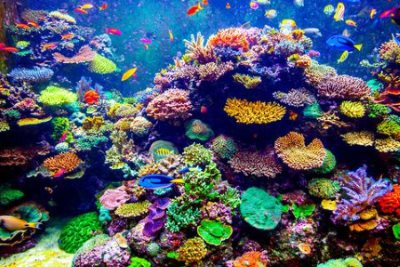
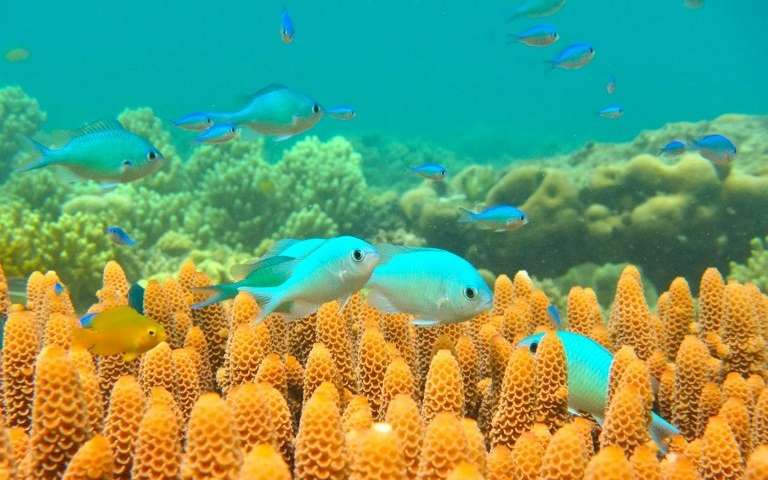
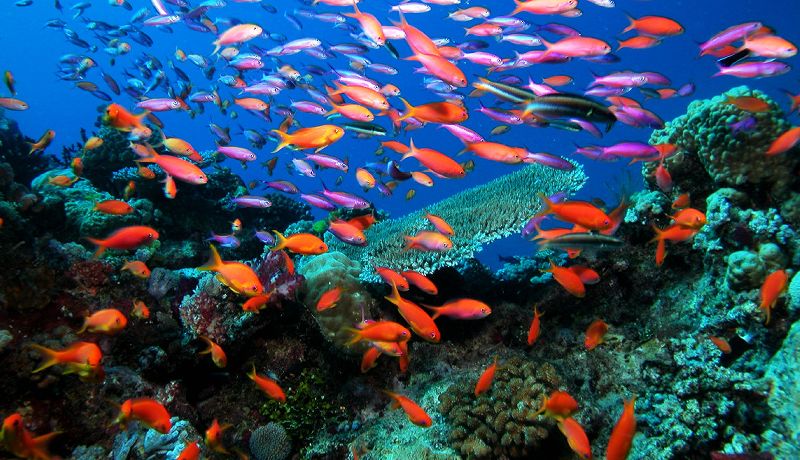
Seahorses tend to be found in shallow coastal waters, the narrow interface between land and sea that is all too often the subject of man’s disruptive actions. In recent years, seahorse populations have been halved in some areas as their natural habitats have been destroyed by development and pollution. Seahorses inhabit mangrove, coral reefs and seagrass meadows which are some of the most threatened habitats in the world.
WHAT YOU CAN Do
Report anything of interest related to seahorse distribution or trade, whether in the UK or abroad, to Project Seahorse. Contact Project Seahorse to obtain further information and blank record sheets, and to adopt a seahorse’.
Do not attempt to keep seahorses as aquarium fish. These are not fish for the novice aquarist. If you do have seahorses, and find that you are able to keep and breed them successfully, please report your findings to Project Seahorse.
Do not buy dried seahorses as souvenirs.
If you see seahorses sold as souvenirs in UK stores complete and return a MCS Curio
Trade Report Card. Contact MCS for details and report cards.
If you are diving and find a seahorse, do not handle it or remove it from its territory. Do not bring it to the surface for closer examination, as it can experience damage akin to ‘the bends’ in humans.
back to top |
|
|
|
|
|
|
|